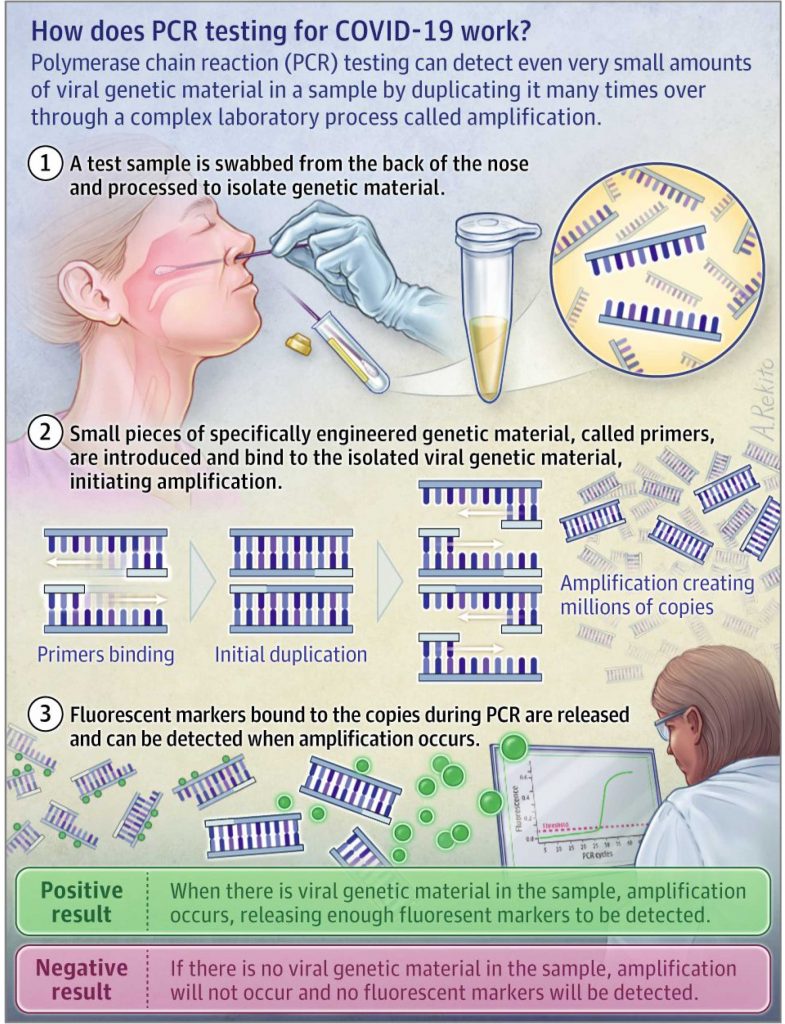
The polymerase chain reaction is used in medicine (and primarily in biology) to amplify a very small amount of genetic material – human, bacterial or viral – for further diagnosis. From practically a single sample of genetic material, we can make several million copies.
PCR (polymerase chain reaction) diagnostics in medicine includes:
• diagnosis of infections (e.g. tuberculosis, COVID-19, chlamydia, mycoplasma, ureaplasma and many others)
• forensic diagnostics
• genetic analysis
The sample can be taken from any part of the body – wherever the genetic material being sought is found. A primer (a short starter sequence) is added to the DNA sample under specific temperature conditions, with great care to avoid contamination, because the method is extremely sensitive. A fluorescent marker is added to the amplified material so that it can be detected more easily. In medicine – including physiatry and rheumatology – the method generally allows genetic material to be identified, so that appropriate treatment can be started.