
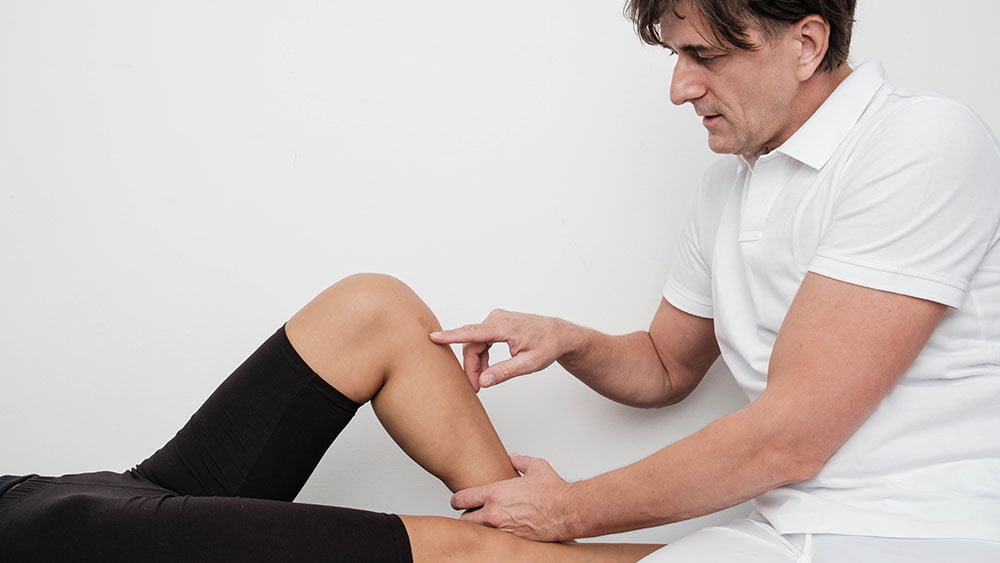
Knee disorders
Knee diseases and complaints can affect children and adults, athletes and people who are less physically active. A quick and effective diagnosis of painful knee conditions requires a medical examination as well as a diagnostic work-up. Diagnostic ultrasound is an excellent method for analysing the soft structures around the knee, such as muscles, tendons, ligaments, the joint capsule and the linings inside the joint itself. Analysis of fluid inside the knee can help in treating metabolic and inflammatory joint diseases.
Diagnostic ultrasound helps with procedures by providing guidance during aspiration, pain blocks, injections and removal of joint fluid (e.g. treatment of a Baker's cyst). Other diagnostic methods are sometimes needed, such as plain X-rays, magnetic resonance imaging (MRI), computed tomography and knee scintigraphy. Common diseases and injuries of the lower limbs, such as tears of muscles, tendons and ligaments, result from trauma, while a Baker's cyst and effusions in the knee may result from degenerative diseases and trauma. The most common degenerative disease is osteoarthritis (arthrosis). Other conditions, such as lipomas, sebaceous cysts, other cysts, ganglion cysts and neurinomas, are clinically somewhat rarer.
The most common metabolic diseases affecting the knee are gout and pseudogout.
The most common inflammatory diseases are rheumatoid arthritis, psoriatic arthritis, reactive arthritis and spondyloarthritis. Anomalies, thromboses, swollen lymph nodes and soft-tissue tumours are not uncommon either.
Contact your doctor or our specialist physiatrists and rheumatologists at Faktor Zdravlje Polyclinic directly.


