
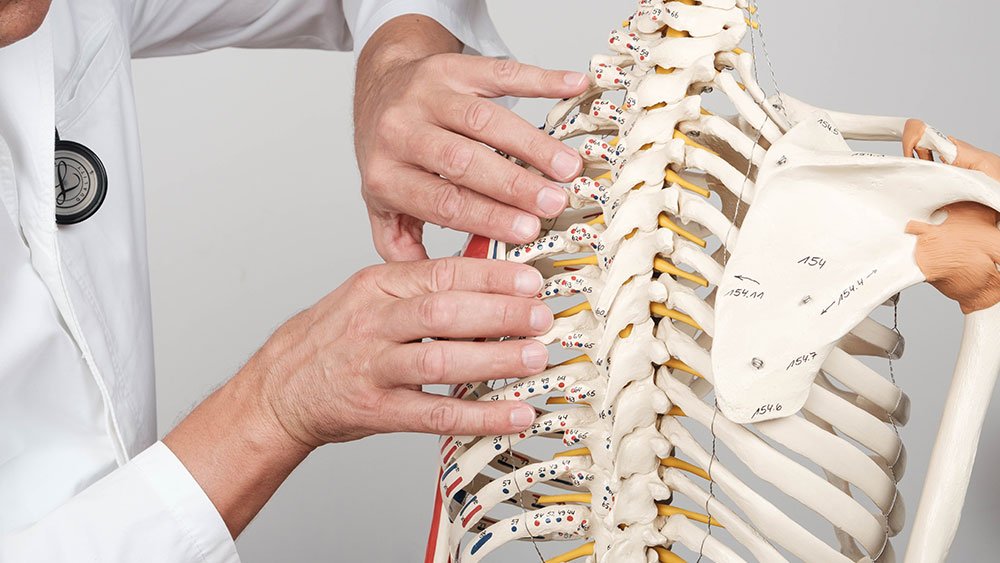
Osteoporosis
Osteoporosis is a bone disease characterised by low bone mass, disrupted bone microarchitecture and an increased risk of fracture. It can be primary or secondary. The increased risk of fractures of the spine, forearm and especially the hip is associated with significant disability and an increased risk of death. These are precisely the reasons why prevention, diagnosis and treatment are needed. Osteoporosis is a systemic disease that affects the whole skeleton, but it can also occur locally. Poor bone quality is not reserved for older people; it can also affect younger people and athletes who train, eat and rehabilitate after injuries inadequately. Bone densitometry (DXA) measures bone mineral density (BMD), but it is only one of the ways of diagnosing the disease. X-rays of the thoracic and lumbar spine, as well as CT, can also reveal changes and the resulting fractures. Sometimes the changes are discovered during routine tests or while investigating another disease. Ultrasound helps with screening but does not have full diagnostic value. Popular, widely accepted and internationally validated composite questionnaires are also available online for estimating the relative risk of fracture. Interpreting such results is a matter for the practising doctor, who will decide on the best way to prevent and treat the condition, that is, to reduce the fracture risk.
1. Recognition / early signs of osteoporosis
Osteoporosis is mostly asymptomatic, or its symptoms are non-specific, until a fracture or other adverse event occurs. Peak bone mass is reached between the ages of 25 and 30, after which bone mass is gradually lost. In its early stage, osteoporosis is hard to recognise without a medical examination and tests, which makes early treatment and intervention – before negative consequences for the body appear – much more difficult. The most serious consequences are fractures of the spine, wrist and hip, but also of the pelvis, upper arm and ankle. Systematic prevention includes regular physical activity, a proper diet and a safe environment. Failing to recognise risk factors related to age, sex, heredity, frequency of falls and level of physical activity (low in a sedentary lifestyle and extremely high in some sports), together with a poor diet, smoking and alcohol consumption, significantly increases the risk of developing osteoporosis and osteoporotic fractures. Osteoporosis also occurs in athletes, and even more so in female athletes, in whom overly intensive and inappropriate training without enough rest and proper nutrition – often together with intentional or unintentional disruption of the menstrual cycle and hormonal status – has a negative effect on bone and general health. The influence of certain medicines and environmental factors is also well recognised. The clinical signs a doctor notices are loss of height, spinal deformities, a change in posture, myalgia, as well as pain in the thoracic and lumbar spine, discomfort and difficulties in the gastrointestinal system, a more protruding abdomen and reduced chest expansion. Interestingly, people notice that the clothes and style of clothing they used to wear no longer fit: their sleeves are too short, their belt no longer fits, and shoulder lines and straps slip down, as do skirts and trousers. Our advice is to avoid unprofessional and inappropriate procedures by medically unqualified people who, out of ignorance, resort to manipulation and osteopathic treatments without any insight into the state of the bones.
2. The importance of vitamin D, calcium and protein in prevention and treatment
Vitamin D, calcium and an adequate protein intake are key factors in bone metabolism that influence the increase in bone mass and the density and quality of bone. Vitamin D also plays an important role in muscle function, which reduces the risk of falls and fractures. Interestingly, vitamin D is produced in our body through a specific interaction of sunlight with the skin, kidneys, liver and digestive system, as well as bones and muscles. The blood level of 25-OH vitamin D is an excellent measure of the body's stores of this vitamin. Vitamin D levels fluctuate during growth and development, and also with the seasons (higher in the summer months, lower in the winter months). Cultural and social differences, the amount of sun exposure and the use of UV-protective creams also contribute to lower levels. This is one example of how everything around us should be moderate and measured, without extreme claims that a single element plays a decisive role. Adequate synthesis and intake support healthy bones and fewer fractures. Vitamin D is involved in a range of immune and metabolic interactions and helps the body defend itself against infections. There are various vitamin D and calcium preparations; vitamin D can be taken as vitamin D2 and/or D3, or in an active/semi-active form. Calcium and an adequate intake of this mineral provide a good basis for bone health, but calcium is certainly not the only factor. Physical exercise is key to preventing and treating osteoporosis, in controlled conditions under the expert supervision of bone-health doctors such as specialists in physical and rehabilitation medicine, so that – through prevention, diagnosis and treatment – people can take up physical activities that are suitable for them. At our polyclinic, alongside specialist doctors, we also have physiotherapists and kinesiologists who will provide you with the highest level of healthcare.
3. Pharmacological and non-pharmacological treatment of osteoporosis
In physiatric and rheumatological practice, early prevention and early treatment are the key to preventing a poor outcome. Specific groups such as athletes, children and older people are more exposed to falls and the risk of fracture, so they are enrolled very early in our osteoporosis school, through either individual or group education. We also pay particular attention to this when teaching students. A range of new, high-quality and well-tested medicines, together with constant progress in science and in our knowledge of bone metabolism and its interaction with other body systems such as the digestive, endocrine, immune and nervous systems, make good and appropriate treatment possible. Medicine knows how bone can be made better and stronger. Cooperation between the doctor and the person before they become a patient is the key to preventive medicine. A pharmacological approach is necessary when a fracture has occurred or when osteoporosis is pronounced. After reviewing your state of health, a specialist physiatrist-rheumatologist will prescribe antiresorptive or anabolic medicines, which are widely available today. When their effect is monitored through bone markers and follow-up densitometry, osteoporosis can even become reversible, and in any case the risk of fracture is reduced. Using spinal orthoses, whether rigid or semi-rigid, can reduce pain in the short term and prevent further fractures, but it can never replace good pharmacological treatment and appropriate exercise.
4. Prevention
We are often asked at what age women and men should start thinking about having their bones checked. Bone health is a continuous process that should be looked after from early youth, not only once problems have already appeared – although even then there are effective medicines. ‘Prevention is better than cure’ is an old saying that takes on its full meaning with osteoporosis. An integrated medical approach combining physical activity, a proper diet and appropriate treatment achieves the best results. An adequate intake of vitamin D and protein, together with stopping smoking and reducing alcohol intake, benefits musculoskeletal health and helps reduce risk and speed up recovery. Musculoskeletal health is an integral part of the work of our polyclinic, which will help you recover quickly and safely.


