
Shoulder disorders
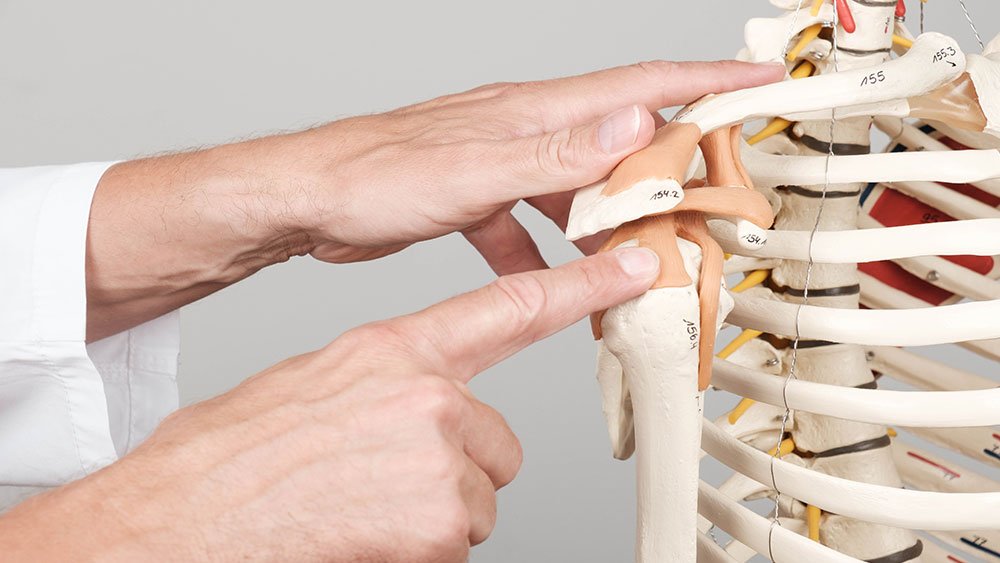
The shoulder joint – or, more accurately, the shoulder girdle – consists of several joints, all of which take part in shoulder movement: the glenohumeral joint connects the shoulder blade and the upper arm, the acromioclavicular joint connects the acromion of the shoulder blade and the collarbone, the costovertebral joint connects the ribs and vertebrae, the sternoclavicular joint connects the breastbone and the collarbone, the sternocostal joint connects the ribs and the breastbone, and the scapulocostal joint connects the shoulder blades and the ribs. Shoulder movements also activate all the other neighbouring joints and connections. The complex nerve supply, bursae, tendons and ligaments can all reduce function and cause shoulder pain. Pain referred from the neck and internal organs should be ruled out as soon as possible.
Contact your doctor or our specialist physiatrists directly so that the exact cause can be identified and treatment started as soon as possible. The most common disorders affecting the shoulder joint and shoulder girdle are disorders of scapulothoracic rhythm, subacromial impingement, partial or complete tears, frozen shoulder (adhesive capsulitis), calcifications in the shoulder, fractures and shoulder instability due to dislocations.


