
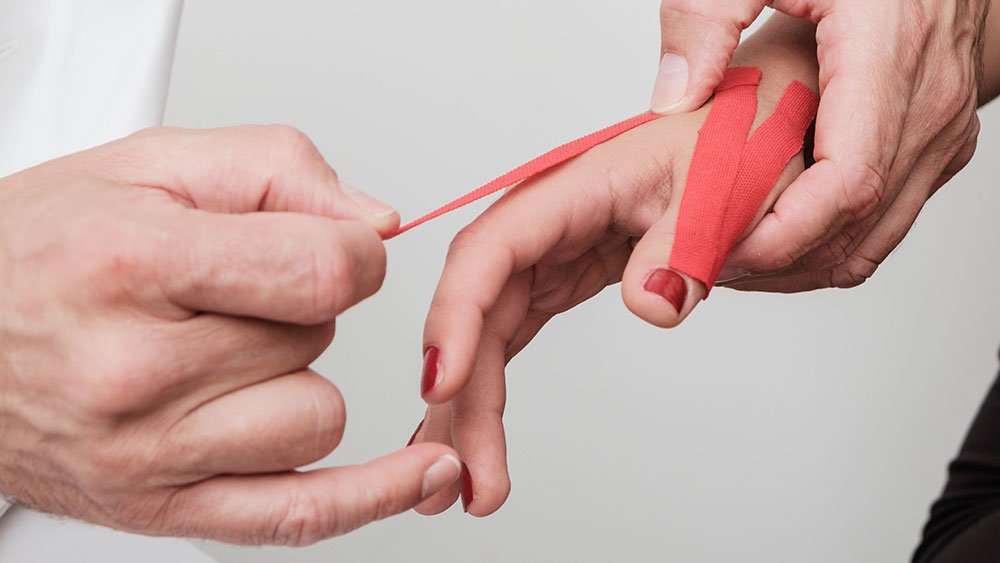
Hand and wrist rehabilitation in sport
The hand is an effector organ, and it is through the hand that we interact most, and most effectively, with our surroundings. The distal part of the arm is affected in a number of diseases, so an experienced physiatrist and rheumatologist will always pay it special attention, because the appearance of the hand alone can show what kind of disorder is involved or point to a possible cause. Some injuries of the hand and wrist – that is, of the distal radius and ulna – are so typical that they are named exactly that (the typical radius fracture – fractura radii loco typico), while others are described by the names of the authors who classified them, such as Colles' fracture of the distal radius.
The reverse of Colles' fracture is called Smith's fracture. A fracture of the radial styloid is called a chauffeur's fracture, while Barton's fracture is an intra-articular fracture of the rim of the distal radius.
Rehabilitation is specific to each of these injuries; for example, older people have reduced bone quality because of their age, so osteoporosis must also be treated. Injuries to the scaphoid bone heal somewhat less readily because of its particular blood supply, and the function of the thumb also makes the rehabilitation process more difficult and demanding. The clinical picture on examination, together with dedicated scaphoid X-ray views or a CT or MRI scan of the wrist and hand, is essential for detecting the fracture. Sometimes these have to be repeated so that the rehabilitation process can be appropriate.
Fractures of the other carpal bones, whether isolated or combined with other injuries, and fractures of the metacarpal bones or finger bones usually also involve the soft-tissue ligament and muscle structures. Avulsion fractures of the fingers are common. Injuries to the finger extensors, whether deep or superficial, can already be detected during a clinical examination by a physiatrist. Special anatomical structures called pulleys, located on the palm side of the hand, can be affected by traumatic as well as inflammatory and degenerative processes. Each finger has 5 annular and 3 cruciate pulleys.
The annular pulleys are labelled with the letter A (A1–A5) and the cruciate pulleys with the letter C (C1–C3). At Faktor Zdravlje Polyclinic, the diagnosis and treatment of hand function have a particularly important place because of the wide variety of disorders in physiatry and rheumatology.
Just some of the differential diagnoses – such as ganglion cysts, which are benign by nature, but also some pathological changes with a poor prognosis – require diagnosis, treatment and follow-up. Examples include arthropathies, avascular necrosis and nerve entrapment syndromes in the hand, such as carpal tunnel syndrome affecting the median nerve, or Guyon's canal syndrome affecting the ulnar nerve. The triangular fibrocartilage complex is a cartilage and tendon structure on the medial (ulnar) side of the wrist that is very important for the function of the wrist and hand.
At our polyclinic, sports rehabilitation of the hand and wrist is led by a physiatrist and a kinesiologist.
Appointments: 01 3737 333 · info@faktorzdravlje.com · Domobranska 25, Zagreb


