
Carpal tunnel syndrome
Carpal tunnel syndrome – a neuropathy of the median nerve, which supplies the hand – is a common problem in younger and older people alike. It is caused by mechanical compression of the median nerve as it passes through the carpal tunnel, which is located in the wrist, where the forearm meets the palm. It can develop at any age, but becomes more common as we get older. Factors that contribute to the development of carpal tunnel syndrome include hormonal changes (menopause, pregnancy), obesity, thyroid disease (especially hypothyroidism), diabetes and, in particular, manual activities such as using a computer mouse and heavy physical work, including working out in the gym.
It more often affects the dominant hand, but it can affect both. In the early phase, which can last for many months or even years, it shows itself through subtle subjective symptoms, usually a dull pain at night that makes you move your hand and, usually, feel the need to shake and massage it. The discomfort is not necessarily limited to the carpal tunnel area; it can also spread towards the palm, forearm and upper arm, all the way up to the shoulder. The fingers can be stiff (carpal tunnel syndrome needs to be distinguished from inflammatory rheumatism, especially rheumatoid arthritis) and uncoordinated for short periods (especially when the patient wakes up in the morning). Things can slip out of their hands, so female patients often say they keep ‘breaking the dishes’.
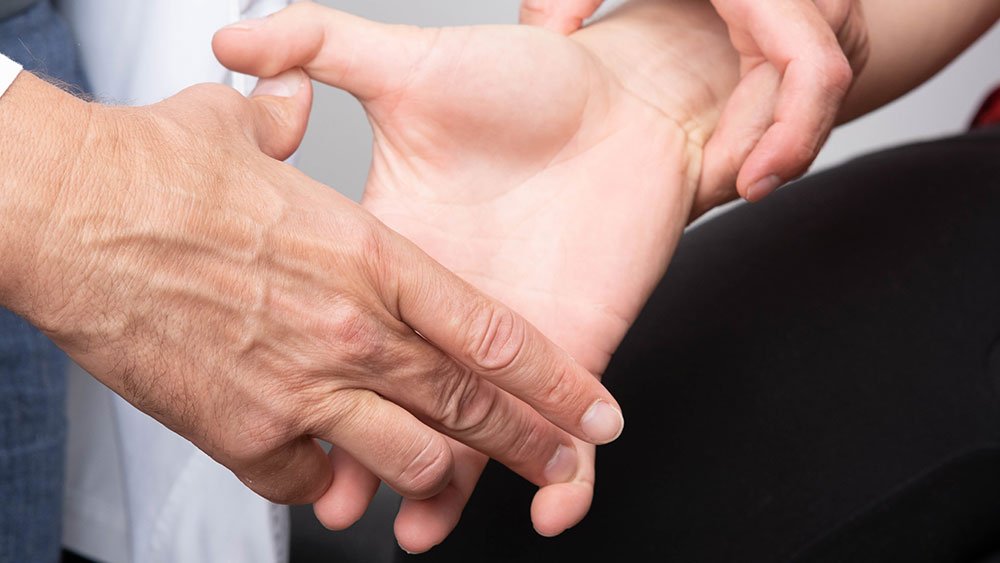
In the advanced phase there are abnormal sensations (paraesthesia) and an impaired sense of touch, mainly in the thumb and index finger, but they can also occur in the middle finger and half of the ring finger. A careful examination by a physiatrist, or by other specialists who deal with this area, such as neurologists and orthopaedic surgeons, can establish a sensory and motor deficit. The examination includes specific tests such as Tinel's sign, Phalen's sign, two-point discrimination, the bottle sign (grasping a cylindrical object) and manual muscle testing. On inspection, loss of the normal shape of the palm can be seen, especially wasting of the thenar muscles. All of this can also be confirmed with nerve conduction studies (electroneurography) of the arms, which show reduced nerve conduction. Ultrasound of the carpal tunnel also gives a specific finding, as it can show pressure on the nerve itself. It is used more and more often because it is a painless and quick diagnostic method, and it can also be used to monitor treatment and recovery.
At Faktor Zdravlje Polyclinic, we use the latest ultrasound machine to determine whether the nerve is compressed and whether changes have occurred that require an injection of medication into the carpal tunnel or surgery. Treatment starts above all with rest and sparing the hand, an analysis of the everyday activities that bring on the symptoms, and ruling out possible systemic causes. Wrist and hand orthoses (splints) are used, especially at night, in a neutral position. Various physiotherapy treatments are used, which you can have at Faktor Zdravlje Polyclinic (magnetotherapy, electrical stimulation, therapeutic ultrasound, laser and various electrotherapy procedures, depending on the condition of the nerve and the surrounding structures). Besides surgery to release the nerve, which is done by cutting the flexor retinaculum, an effective treatment is a corticosteroid injection under ultrasound guidance. In this way a large number of patients can be helped precisely and without unnecessary incisions. After the procedure, rehabilitation is essential, including hand exercises to restore the coordination and strength of the hand muscles.


