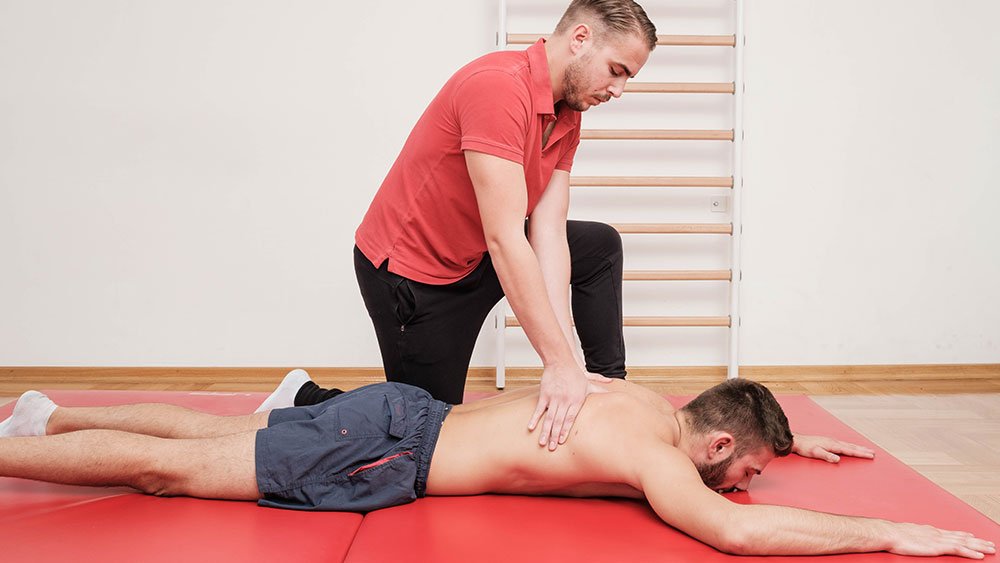
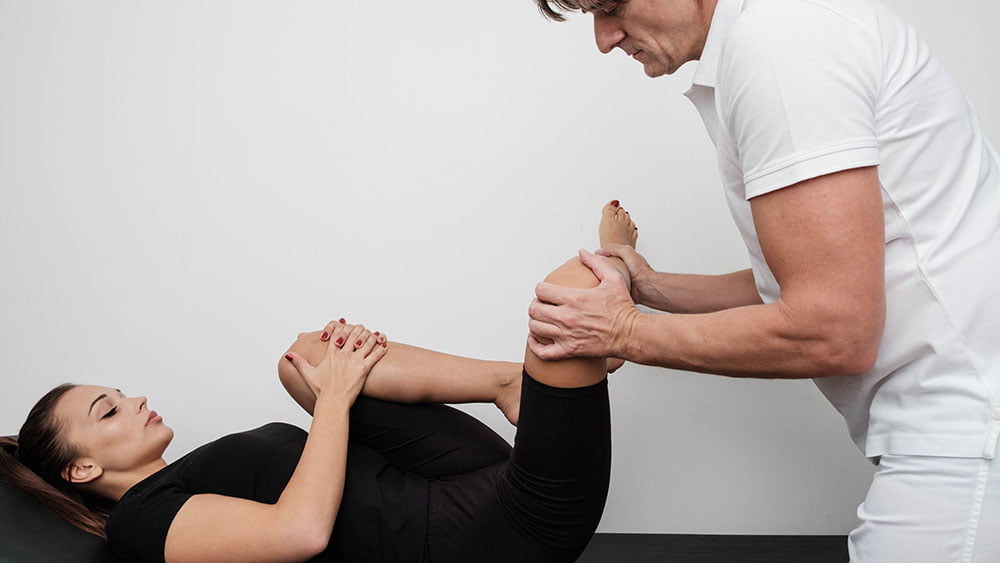
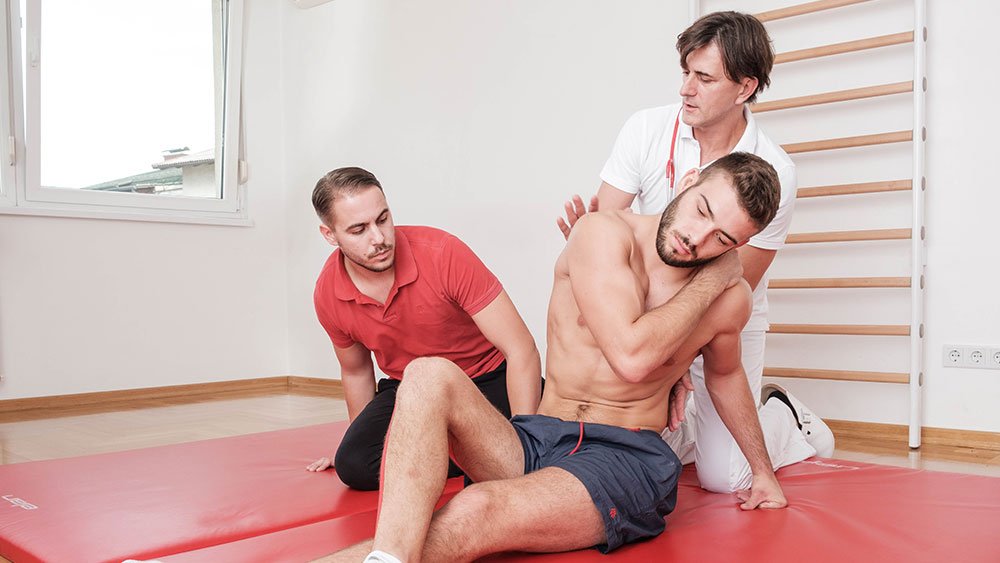
Exercise therapy, or kinesitherapy (from the Greek kinesis, ‘movement’, and therapeia, ‘treatment’), also known as medical gymnastics, is a medical discipline that uses movement to treat people with illness or injury. It plays a leading role in musculoskeletal rehabilitation and is unquestionably the most valuable method of physiotherapy. The main aims of exercise therapy are to restore, maintain or increase range of motion; maintain and increase muscle strength; increase endurance; develop or improve movement coordination (muscle education and re-education); increase speed of movement; improve posture and body position; prevent and correct various deformities; and improve the function of individual organ systems.
In other words, exercise therapy covers any programme that requires participants to perform repeated voluntary movements, involving either active (dynamic) or static muscle contractions. The exercises must be prescribed or carried out under supervision. They are usually divided into four basic types: range-of-motion exercises, strengthening exercises, endurance exercises and conditioning exercises.
Range-of-motion exercises are based on the contract–relax principle and aim to maintain or increase the range of motion in the joints, which requires going past the initial point of resistance, that is, the point at which pain begins. Strengthening exercises are based on the principle of load and muscle tension and are done only once full range of motion has been achieved; they are divided into isotonic, isometric and isokinetic exercises.
Endurance exercises include aerobic and anaerobic endurance exercises. Conditioning, or recreational, exercises are used in both healthy people and patients to improve the function of the musculoskeletal, cardiovascular, central nervous, endocrine, metabolic, digestive and respiratory systems, as well as the person's mental state. Exercise therapy follows certain rules. Above all, this means an individual approach to each patient. When exercises are prescribed, the patient's health, age and general fitness must be taken into account. Exercises are most often done lying down, but they can also be done sitting, standing, on all fours or hanging. At the start, the therapist must always describe each exercise to the patient, then demonstrate how it is done, and finally continue to supervise the patient's own exercise, with encouragement and appropriate advice. Exercise should begin with a gentle warm-up, after which the intensity is increased until fatigue sets in. The exercises consist of repeated muscle contractions, alternating in a rhythmic sequence with rest breaks.
In general, the benefits of exercise can be divided into systemic and local. Systemic effects include increased cardiorespiratory capacity, higher bone mineral content and reduced pain. Local effects include increased range of motion and muscle strength. Exercise calls for caution, which is why supervision and monitoring by a doctor, kinesiologist and physiotherapist working together are essential.
There are different types of exercise, and a good programme needs to use all of them, because they have different effects. The warm-up is followed by dynamic stretching, then range-of-motion exercises (mobilisation) and strengthening exercises, and finally relaxation exercises. Nor should we neglect breathing exercises or general conditioning exercises, which are important for maintaining the overall functional capacity of the musculoskeletal system.
Our polyclinic's specialist team delivers an exercise therapy programme that includes, among other things, aerobic exercise and exercises for range of motion, muscle control, balance and coordination, and posture.

 Book an appointment