
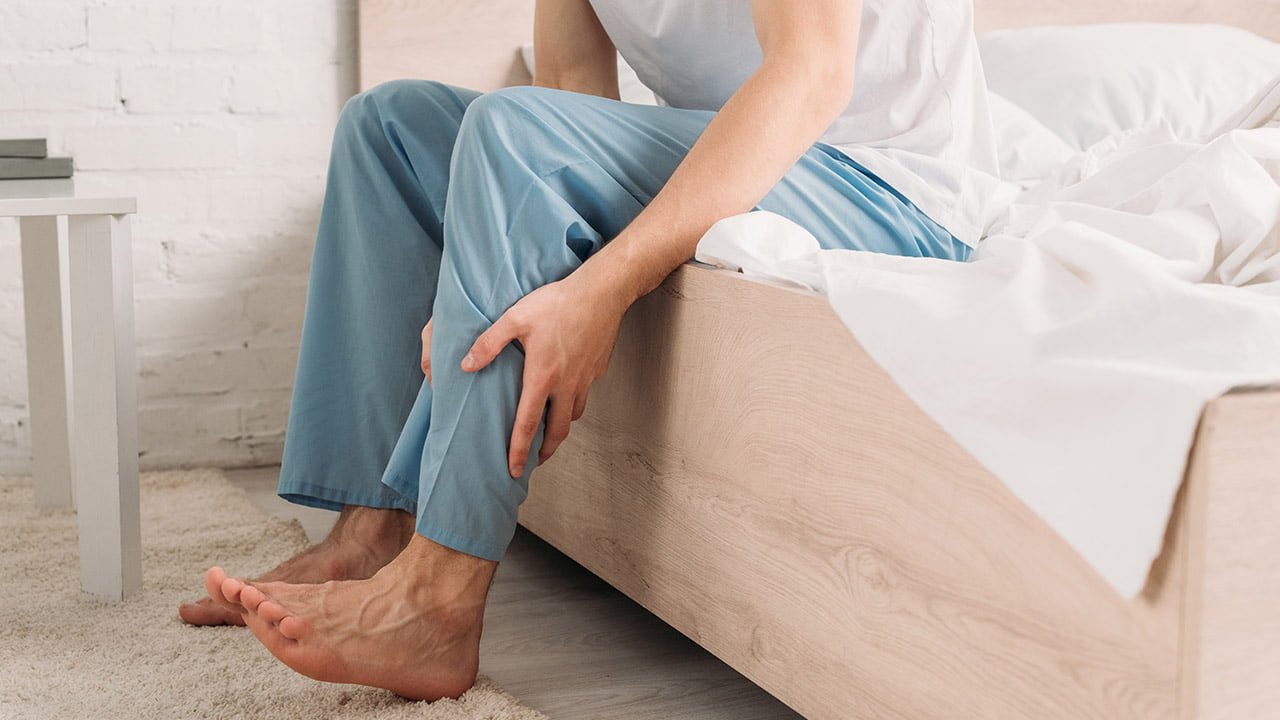
Muscle cramps, also called spasms or crampi, are common and have many causes. Cramps occur during physical work, such as exercise, but also during hormonal changes, psychological tension and even rest – spontaneously, for no clear reason.
In fact, cramps often occur in people who are less active, or when people are resting between activities. Their unpredictable nature and intensity cause fear and uncertainty. In older people they often come on at night, during sleep. For athletes they are a big problem, because cramps or spasms arise during demanding sporting activity and take them off the field. A cramp – a painful muscle contraction – arises from instability of the neuromuscular junction or within the structure of the muscle itself, because of a disturbed internal environment. We know that dehydration and changes in electrolyte balance, that is, in the amount of electrolytes, play an important role. But the answer is not always that simple, and a number of other factors play an important role, from overuse syndrome to job satisfaction, all within the biopsychosocial model of illness.
To avoid or ease cramps, it is important to drink fluids regularly and to keep the electrolytes in the body in optimal balance – among them, I would single out magnesium. We must never forget that warming up and stretching are the most important parts of exercise. Otherwise, we can sustain far more serious injuries and symptoms than cramps. Exercise that is planned and structured with a clear goal can help to control phenomena such as cramps.


