
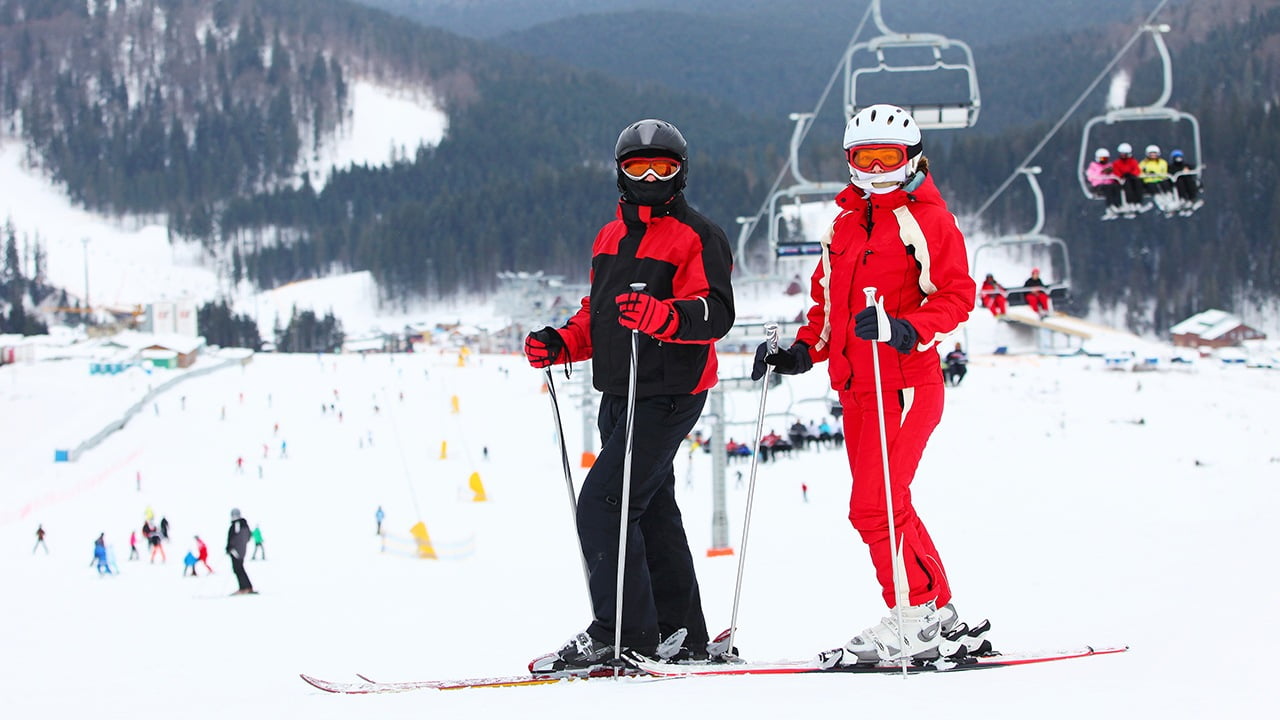
Skiing is a popular sport enjoyed by athletes and recreational skiers alike. Some knee and thumb injuries are so typical of it that they are known in medicine by their own names: the ‘unhappy triad’, a knee injury, and ‘skier's thumb’, an injury to the thumb. Of course, any other injury can also happen on slippery, icy, snow-covered surfaces, and if we add equipment that requires lessons and early involvement in training, it is no wonder that most injuries are nevertheless atypical – anything is possible, from injuries to the head, shoulders, spine and hips to the lower legs and feet.
Skiing has turned a natural disaster into fun. There is nothing wrong with that if we prepare physically and mentally, if the slopes are well groomed and if we have good equipment. When an injury happens, it is not the end of the world. Our advice: don't push yourself – rest, take off your ski boots and watch the injured area for swelling, bruising, pain or tingling, and see how much weight you can put on the limb. If you did not see a doctor at the ski resort, be sure to see one when you get home. An examination by a physiatrist and the necessary diagnostic tests will contribute to a faster recovery and rehabilitation and reduce the risk of chronic injuries and pain. At Faktor Zdravlje, we will start rehabilitation straight away, even if you have a plaster cast or a splint, i.e. immobilisation, because even when the immobilised part of the body cannot be moved, it is possible to prevent deep vein thrombosis, pulmonary embolism and pneumonia, which are not that rare during rest after injuries, especially of the lower limbs – and if long journeys by plane or car are added, the risk becomes even greater. In Croatia, and also in Italy, Germany, France and Austria, you will often be given heparin (low-molecular-weight heparin) when immobilised – do not refuse it if it is offered! Bring any scans taken abroad to your examination so that we can see the condition and monitor your progress.
The knee injury is perhaps the most typical and involves injury to the medial collateral ligament and the medial meniscus, usually its posterior horn, together with a rupture of the anterior cruciate ligament. The knee is swollen, with an effusion inside the joint. Pain is present at rest and even more on movement; movement is reduced and the knee cannot be straightened, there is usually a feeling of heat and burning, and after a few days a bruise becomes visible around the knee and lower leg. If you have these signs, see your physiatrist for further tests – most often magnetic resonance imaging (MRI), which, together with an X-ray taken beforehand, will tell us about the type and method of treatment, whether surgical or conservative. Knee rehabilitation, however, is essential before or after surgery – usually both before and after. Locally, before starting active movement, we can also apply a heparin gel and a non-steroidal anti-inflammatory gel. You also need to learn to walk with crutches; all of these are prerequisites for active rehabilitation.
In active rehabilitation, we use physiotherapy modalities depending on the injury – most often magnetotherapy, laser, ultrasound, electrical stimulation and other electrotherapy procedures. Careful monitoring of the rehabilitation process, day by day and week by week, and regaining a full range of pain-free movement are the goals of physiotherapy and rehabilitation. Your physiotherapist and physiatrist will help you recover from your injury. Sometimes recovery is complicated by algodystrophy (Sudeck's syndrome), and an experienced physiatrist-rheumatologist can then speed up your rehabilitation with special physiotherapy treatments.
Faktor Zdravlje Polyclinic wishes you happy skiing.


