
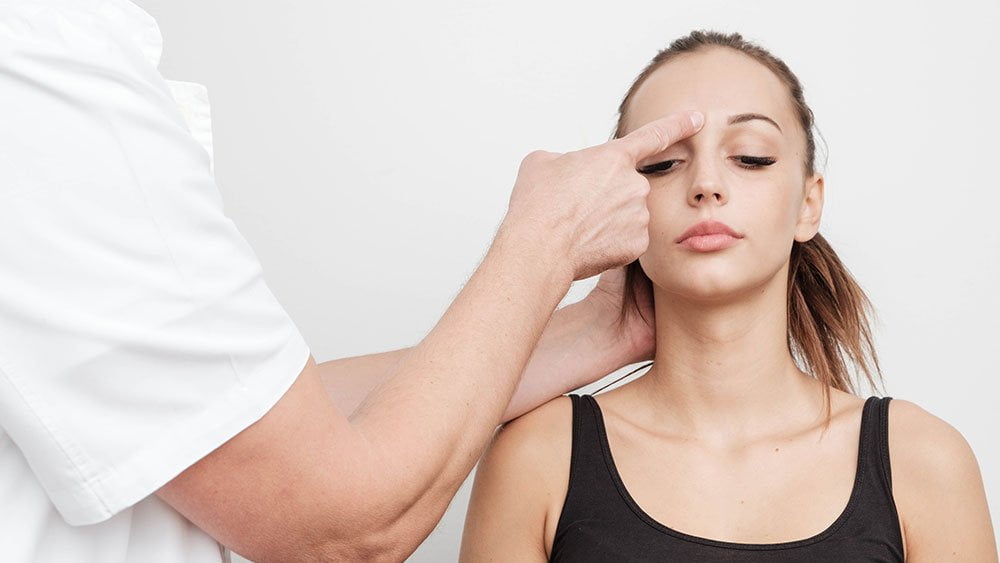
Central nervous system rehabilitation in sport
Brain and spinal cord injuries are common in sport: despite preventive measures, recreational sport – and even more so top-level competitive sport – is becoming a new battlefield. Traumatic head injuries can have serious consequences and require specialist rehabilitation. Grading the severity of the injury as mild, moderate or severe with standardised tools such as the Glasgow Coma Scale (GCS), which is based on assessing the level of consciousness, together with other indicators from the medical history, clinical examination and diagnostic tests, determines how central nervous system injuries are treated and rehabilitated. Examination and follow-up by a doctor are an essential part of good medical care. Taking timely action prevents the primary injury from progressing over the following hours and days, because the initial impact – with impaired blood circulation and metabolism, massive damage to neurons and release of neurotransmitters, oedema of the brain tissue and disrupted homeostasis – leads to damage to highly sensitive brain cells and to cell death.
Ignoring the symptoms a person has at the outset can have significant later repercussions. Rehabilitation of central nervous system injuries requires continuous specialist medical supervision by a neurologist and a specialist in physical and rehabilitation medicine and, where necessary, a neurosurgeon and other specialists. Monitoring of the clinical status and early intervention allow adequate recovery, healing and regeneration after central nervous system injuries. Injuries to the skin, scalp and face are recognised and treated early, as are injuries to the eyes, which have aesthetic as well as functional importance, whereas injuries to nerve structures have more dangerous and far-reaching repercussions. Concussion and other, more serious traumatic brain injuries require a graded approach to rehabilitation and to the return to regular daily and sporting activities. A graded return to activities allows good symptom control and a lower risk of the condition becoming chronic.
The first stage consists of activities of daily living that do not provoke symptoms; the second stage is light aerobic activity, such as walking, without resistance training; the third stage is sport-specific exercise that does not involve situations in which the head could be injured; the fourth stage is more intensive non-contact training with progressively increasing exertion; the fifth stage is full contact during training, but under controlled conditions; and the sixth stage is a return to competitive sport without restrictions. Integrated rehabilitation and a functional physiatric evaluation of vestibular dysfunction and visual-perceptual dysfunction are particularly important. Medical complications are always possible, so cooperation is needed from the athlete and from the people around them – especially family, coaches and teammates, as well as the physiotherapists and kinesiologists involved in sports and club activities.
Rehabilitation after traumatic injuries of the central nervous system has a good effect on neuroplasticity and cognitive abilities and slows neurodegenerative processes. Faktor Zdravlje Polyclinic applies an integrated medical approach to rehabilitation after traumatic brain injury. Our specialists in physical medicine and rehabilitation, together with our excellent physiotherapists and kinesiologists, will enable you to make a quick and safe recovery.


