
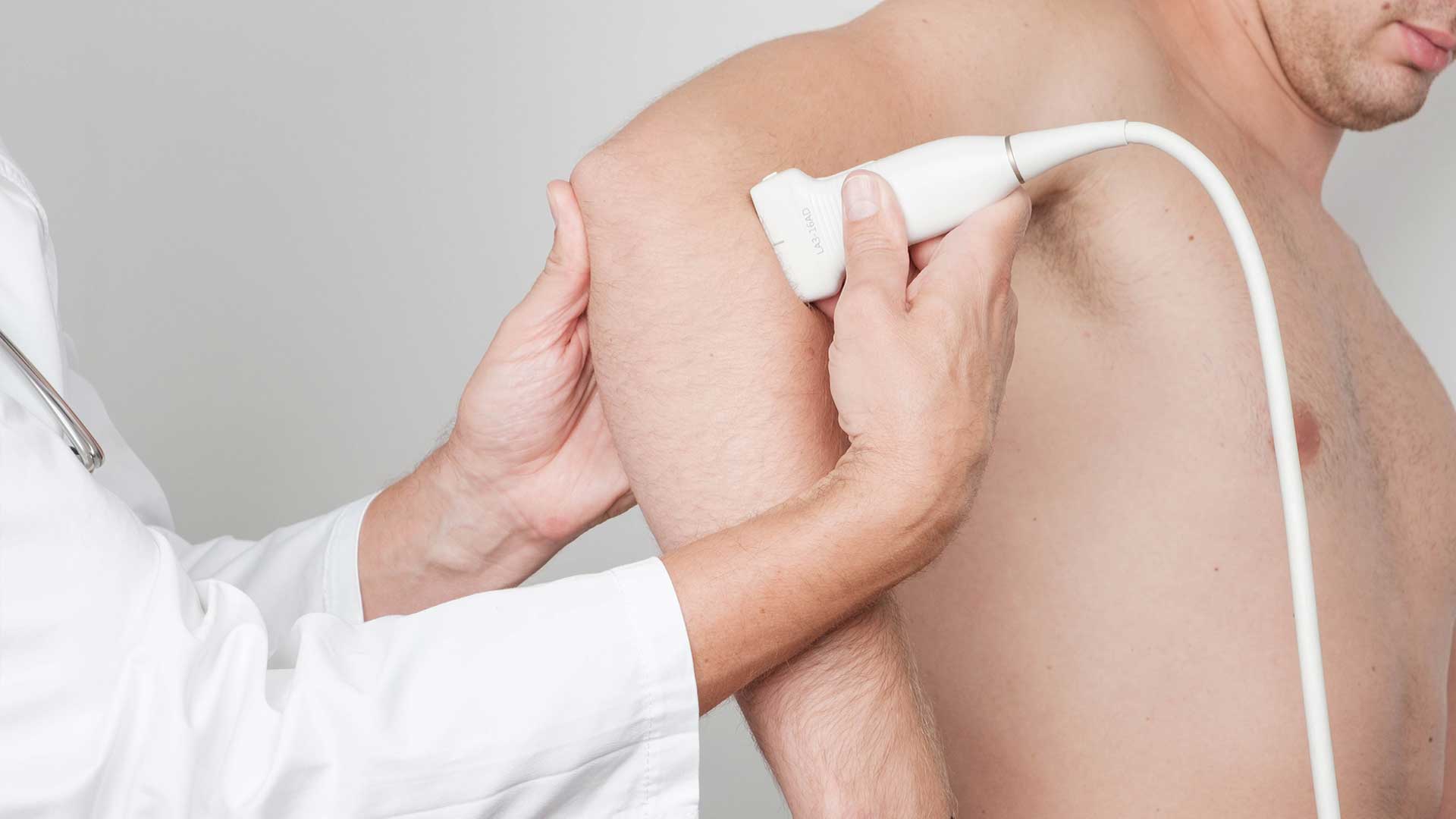
Elbow ultrasound
Diagnostic ultrasound of the elbow and the structures around it reveals a range of pathological processes affecting soft tissues and superficial bone, muscle, tendon, ligament and joint structures, as well as blood vessels and nerves. Entheses – the attachments of the triceps or biceps and the common extensor and flexor origins of the forearm – can be seen precisely with diagnostic ultrasound, as can effusions inside the joint and tears of the medial or lateral collateral ligament and of the annular ligament.
Many nerve structures pass through the elbow region, such as the radial, ulnar and median nerves, and enlarged lymph nodes can also be seen. Elbow conditions that we can detect with diagnostic ultrasound include traumatic damage, tears, overuse syndromes, lateral and/or medial epicondylitis and others.
Inflammatory conditions include rheumatoid arthritis, ankylosing spondylitis, reactive arthritis, spondyloarthritis, metabolic diseases (gout and pseudogout), diabetic bursitis and infectious diseases, and ultrasound can also show soft-tissue tumours, foreign bodies, and damage to the ulnar, median and/or radial nerves and changes in their sheaths, which can cause pain, weakness and reduced reflexes.
Diagnostic elbow ultrasound has its advantages – above all, it is non-invasive, painless and involves no radiation. Diagnostic elbow ultrasound also allows a functional examination, and it can be repeated many times without any risk.


